
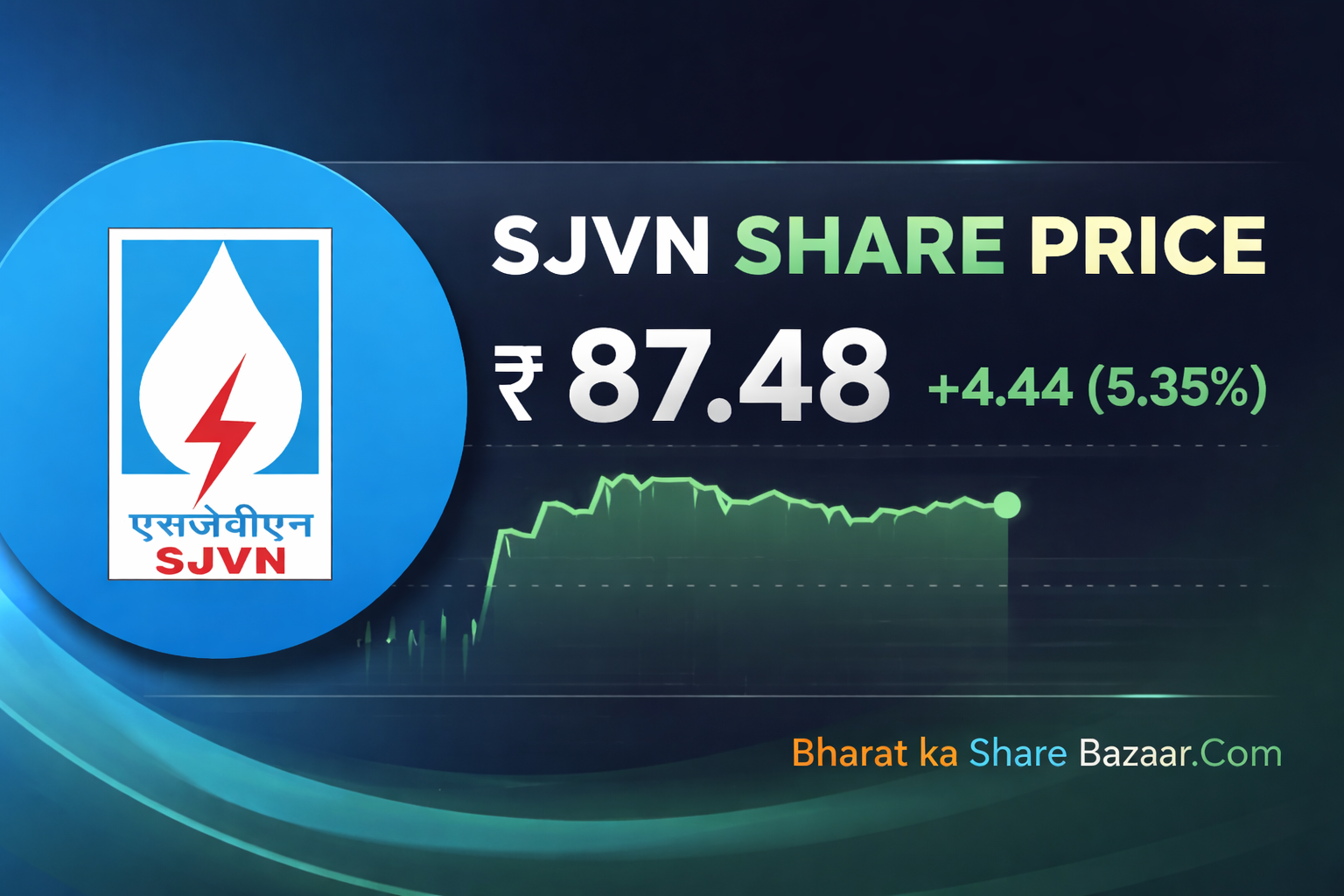
SJVN Share Price 2030
SJVN Ltd (NSE: SJVN) is a government-owned power company in India, best known for hydropower and rapidly expanding into renewable energy. As of early January 2026, its share price is trading around ₹82–₹88 per share.
Let’s explore where analysts and market models think this stock could head by 2030 — and what you should know before investing.
1. Current & Recent Performance
- SJVN’s stock has seen large volatility, rising strongly over multi-year frames but correcting heavily in recent periods, including a 24% decline over the past 12 months.
- The company’s PE ratio is elevated (~58x) and dividend yield ~1.7–1.9%, while net profit and financial performance have shown mixed results.
- Broader market consensus for near-term analysts is neutral to modestly positive, with average 12-month targets close to current levels (~₹87).
Bottom Line: Short-term view is cautious. But long-term potential is judged very differently by various models.
2. Growth Catalysts Through 2030
A. Renewable & Hydropower Expansion
SJVN’s core strength lies in hydropower generation — a clean, long-life asset base — and rapid scaling into solar, wind, and other renewables, aligning with India’s clean energy goals.
India aims for 500 GW of renewable capacity by 2030, and hydropower is a strategic component of that growth.
B. Capacity Target
Management has guided toward 25 GW installed capacity by 2030, up from ~2 GW currently — representing a massive operational scale-up.
C. Policy Support & PSU Advantage
As a PSU, SJVN benefits from policy support, easier land approvals, and long-term PPAs, securing cash flows.
3. 2030 Price Target
There’s no single correct figure, but analysts and predictive models vary widely:
Conservative / Institutional Forecasts
- Research models apply forward earnings and capacity growth to imply ₹266–₹332 target by 2030 (implies ~2x+ from current), driven by earnings growth + valuation expansion.
Range Summary: Most fundamental models cluster around ₹270–₹380 by 2030, while some long-term bull models push into the ₹700+ zone. The huge spread reflects differing assumptions on capacity growth, policy tailwinds, and valuation multiples.
4. Risks & Bearish Considerations
No forecast is certain. Key risks include:
A. Weak Financial Trends
Some market analyses label SJVN as limited in profitability and growth, with a sluggish net sales CAGR and heavy debt burden relative to earnings (high Debt/EBITDA).
B. Valuation Concerns
Despite growth potential, valuation metrics (like ROCE) remain weak compared to peers, and some analysts view the stock as overpriced relative to fundamentals.
C. Execution & Project Delays
Infrastructure projects in India often face delays due to land approvals, environmental clearances, and financing hurdles — potentially slowing capacity additions.
Market Makeup Fluctuations
Energy demand growth, power prices, interest rates, and investor risk appetite will shape returns significantly.
5. Expected CAGR & Returns
Using the institutional 2030 target of ~₹280–₹330 and today’s price ~₹85:
| Scenario | 2030 Target | Implied CAGR (2026-2030) |
| Base Case | ₹280 | 25–27% p.a. |
| Bull Case | ₹350 | 33% p.a. |
| Extreme Bullish | ₹760 | 60%+ p.a. |
These figures are based on price appreciation only — dividends could add incremental total returns.
6. Fundamental Strengths for Long-Term Investors
1) Government Backing & Sector Alignment
Hydropower & renewables remain central to India’s power mix growth.
2) Long-Term Contracts (PPAs)
25–35 year PPAs provide revenue visibility.
3) Strategic Assets with Multi-Decade Cash Flows
Hydro plants typically generate for decades, providing resilience in downturns.
7. Conclusion
Realistic Long-Term Target for 2030:
₹280–₹370 per share — assuming execution, growth in renewable capacity, stable margins, and market valuation recovery.
Bullish Premium Target: Up to ₹700+ under extremely optimistic growth and re-rating.
Bearish / Value Check: Some models caution valuations and fundamental limitations.
Overall: SJVN may offer significant long-term return potential if its capacity goals materialize and policy supports renewables — but it carries execution risk and valuation uncertainty.
Disclaimer: This article is for informational and educational purposes only and does not constitute financial advice. Always consult a qualified financial advisor before making investment decisions.