
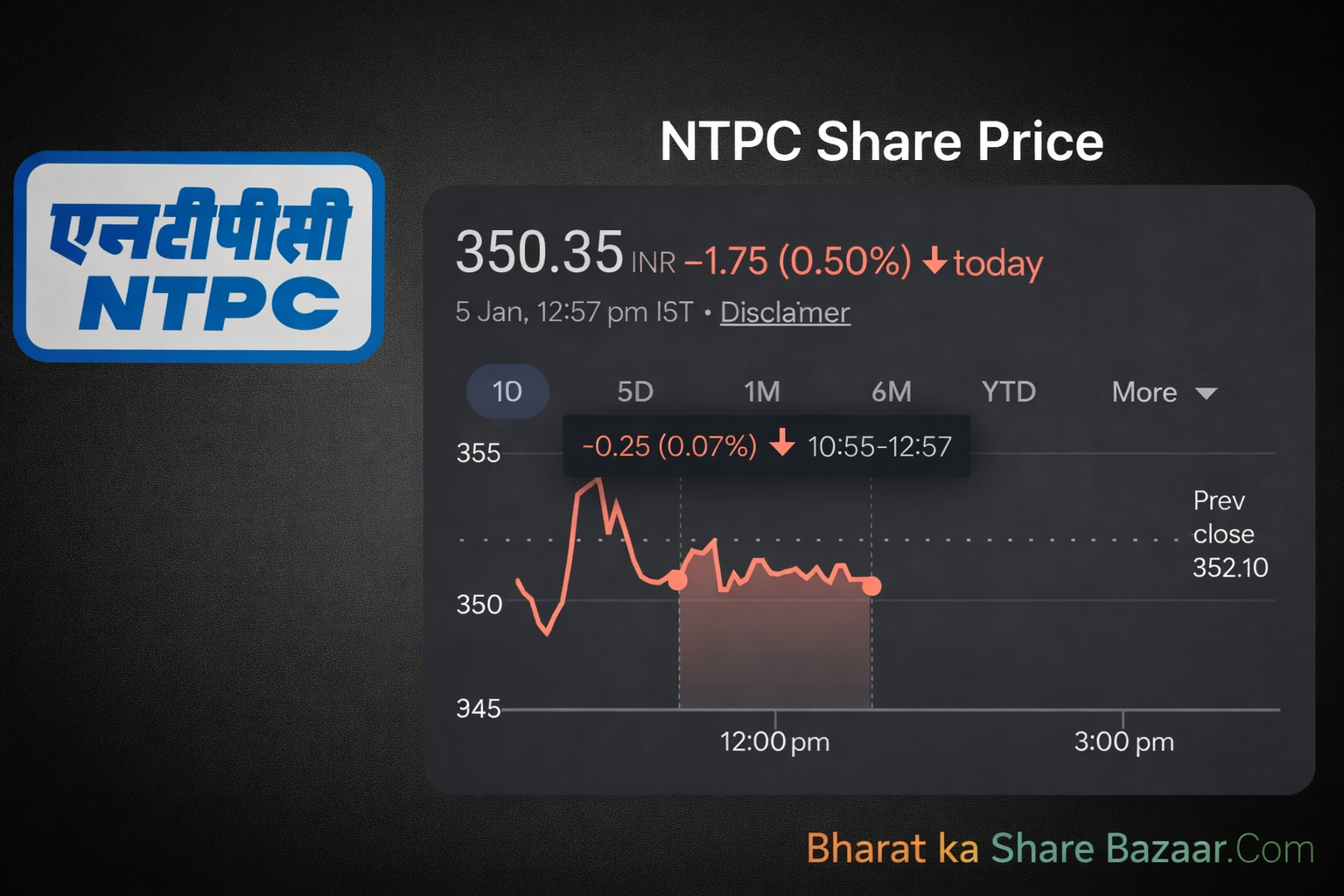
NTPC Share Price Target up to 2030
NTPC Ltd (National Thermal Power Corporation) is India’s largest power producer and a key player in the country’s energy sector. Listed on the NSE/BSE, its share performance reflects both India’s power demand cycle and energy transition dynamics.
Current Analysts & Consensus
- Most analysts rate NTPC as a Buy or Outperform on a 12-month basis, with a strong majority of Buy recommendations.
- The 12-month average target from analyst surveys is around ₹413–₹414, implying solid short-term upside from current levels.
- Some brokerages like Sharekhan have set conservative targets near ₹380.
Long-Term Share Price Target (2030)
Multiple forecasting models and price-target articles project a significant rise in NTPC’s stock price by 2030 (though these are estimates, not guaranteed outcomes):
| Year | Approx. Target (₹) | Potential % Growth |
| 2026 | ₹450–₹495 | 30%–40% |
| 2027 | ₹547 | 60% |
| 2028 | ₹642 | 90% |
| 2029 | ₹738 | 120% |
| 2030 | ₹789–₹873 | 150%+ |
These figures combine different long-term forecasts. The range covers conservative to bullish scenarios; actual results may vary with market conditions.
NTPC Might Rise by 2030
1. Strong Core Business with Renewable Transition
NTPC still earns reliable cash flows from its large coal and gas fleet while rapidly expanding renewable power capacity. It plans tens of gigawatts of green projects, aiming to balance traditional and clean generation — a structural strength as India’s demand grows.
2. Government Support & Strategic Initiatives
- NTPC is diversifying into nuclear energy collaborations with global partners, underlining long-term growth potential.
- Enhanced investment caps and support for renewables help accelerate its green transition.
3. Capacity Additions & Dividend Potential
- Strong thermal capacity adds near-term revenue stability.
- Dividend payments from consistent profitability make NTPC attractive to income-oriented investors.
4. Broader Energy Demand in India
India’s power needs are rising with population and industrial demand. As a market leader, NTPC could benefit from regulatory protections and long-term contracts, enhancing earnings predictability.
Risks & Headwinds to Consider
1. Policy and Regulatory Challenges
NTPC has warned about potential lifespan impacts on traditional coal plants if they must operate at low loads due to renewable grid integration — a risk that could damp margins.
2. Fuel Price Volatility
Exposure to coal prices and transport costs still affects profitability, especially in thermal generation.
3. Market Cycles & Technical Factors
Some traders note possible short-term bearish technical signs, suggesting patience and careful entry timing may matter for short-term traders.
Buy, Hold & Sell Strategy
Buy
- Long-term investors (5–10+ years) who believe in India’s increasing energy demand and NTPC’s diversification are often recommended to buy.
- Consistent dividend history and large scale provide downside support.
Best suited for: Investors with a long horizon targeting steady capital appreciation and dividends.
Hold
- Investors already with positions may hold to benefit from long-term structural growth, especially as renewable projects scale.
- Appropriate if income and dividend yield outweigh short-term price volatility.
Best suited for: Dividend-oriented or long-term portfolio holders.
Sell
- Short-term traders focused on immediate gains might consider selling if price targets are met or technical indicators trend downward.
- If fundamental headwinds (like policy risk or lower power demand) intensify, trimming positions could be prudent.
Best suited for: Traders seeking short-term profits or risk-averse investors in volatile markets.
Conclusion
NTPC remains one of the core energy sector stocks in India with strong government ties, diversified power portfolio, and reliable cash generation. Long-term forecasts and analyst ratings overwhelmingly lean toward Buy/Hold for investors with a horizon up to 2030, with potential targets ranging broadly from ₹800 to ₹870 depending on growth execution.
However, investors must weigh policy risks, fuel volatility, and broader market cycles. Always consider your risk tolerance, time horizon, and financial goals before making investment decisions.
Disclaimer: Stock price forecasts and analyst opinions are based on models and estimates. Past performance is not indicative of future results and this article is for informational purposes, not investment advice.