
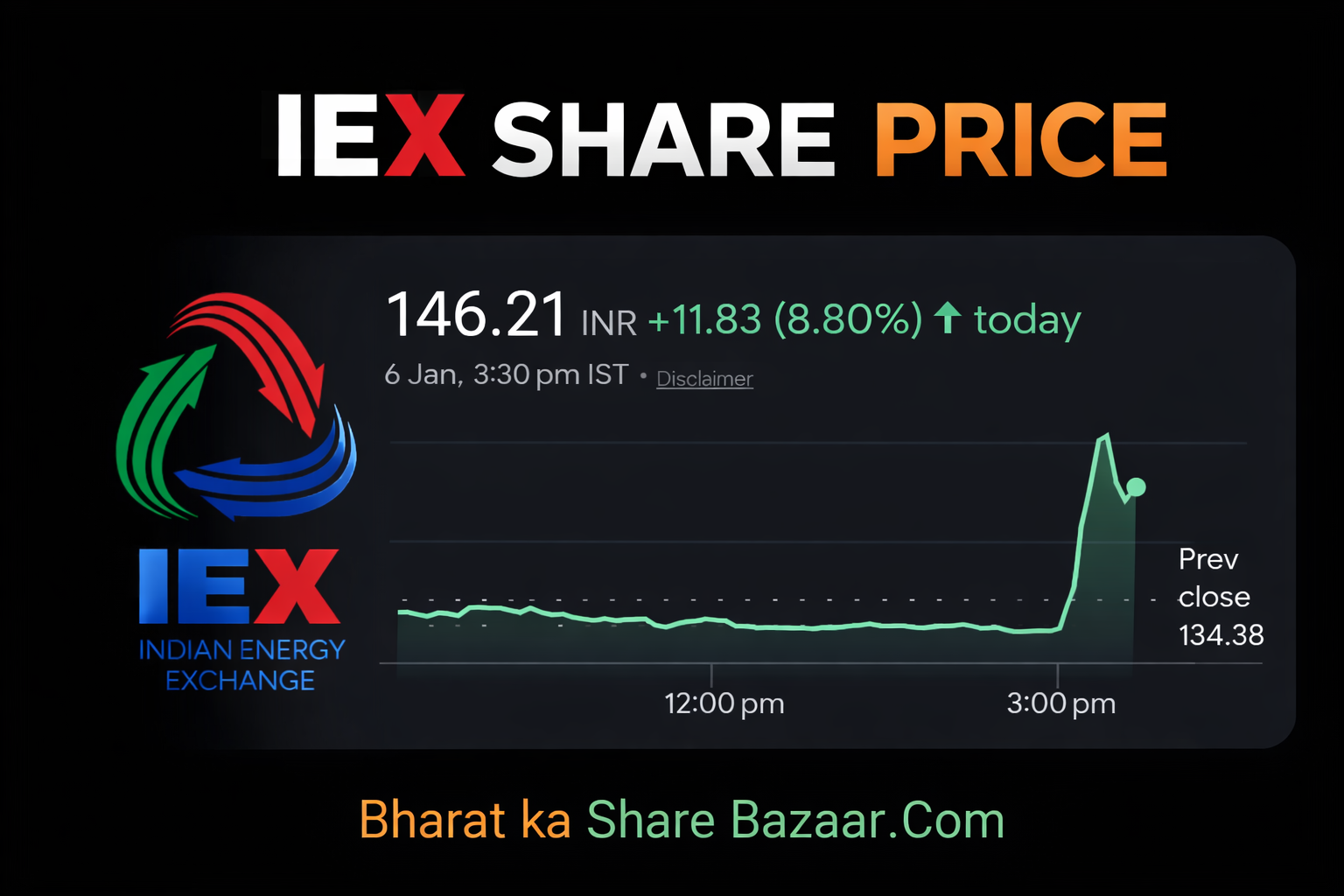
IEX Share Price Target 2030
Indian Energy Exchange (IEX) is India’s premier electricity trading platform. It enables buyers and sellers to trade power contracts in a transparent, efficient marketplace. Over the last decade, it has become central to India’s energy market — especially with rising renewable power integration. However, regulatory shifts and competition are reshaping its future outlook.
Here’s what analysts and market models project for IEX share price by 2030, along with the key opportunities and risks investors should know.
1. IEX Share Price Targets by 2030
Bullish Long-Term Scenarios
Some long-term forecasts suggest multi-bagger potential by 2030, driven by India’s energy transition and trading volume growth. Estimates from certain financial sites project targets as high as:
Estimated Target by 2030
| Conservative | ₹350–₹500 per share |
| Moderate | ₹720 per share |
| Very Bullish | ₹2,500–₹3,500 per share |
| Alternate Bullish Forecast | ₹1,700–₹2,000 per share |
These wide ranges reflect different assumptions about growth pace, business expansion, regulatory impacts, and earnings multiples.
2. Why Some Are Bullish
Market Growth & Energy Demand
India’s electricity consumption — including renewables and gas — is expected to grow significantly by 2030. This trend supports higher trade volumes on exchange platforms like IEX.
Renewables & Trading Expansion
IEX is scaling products such as the Green Term-Ahead Market (GTAM) and gas trading (via IGX), helping capture the surge in renewable energy trading.
Low Debt & High Margins
Historically, IEX has low debt, strong operating margins, and consistent profit growth — features that support higher valuations over the long term.
3. IEX Share Impact 2030 Targets
Regulatory Shifts
In 2025–26, India’s energy regulator introduced market coupling, which unifies price discovery across power exchanges. This reform could reduce IEX’s pricing power and dominant position. Recent share price drops and lowered broker targets reflect this uncertainty.
Competitive Pressure
New power exchanges like PXIL and HPX are gaining traction. With market coupling, these rivals may erode IEX’s share and compress trading fees.
Valuation & Sentiment
Some forecasts anticipate slower returns if earnings growth or trading volumes fail to meet expectations. Conservative models place 2030 farther below the most optimistic estimates.
4. IEX Share Journey to 2030
Early Year Targets
Most intermediate forecasts show steady growth from current prices through the mid-2020s, contingent on stable revenue and sector expansion.
Long-Term Drive
Long-term targets hinge on renewable energy adoption, digital market evolution, and IEX’s ability to innovate beyond traditional electricity trading — for example, into carbon credits or cross-border energy products. Analysts who are bullish assume strong policy support for clean energy.
5. What This Means for Investors
Long-Term Growth Potential
If India’s energy demand continues to rise and IEX successfully transitions into new segments, long-term investors could benefit from compounded returns.
Volatility & Regulation
Regulatory changes like market coupling show how quickly fundamentals can shift. Investors need to weigh these structural risks alongside earnings growth.
Not Financial Advice
All forecasts are forward-looking and based on assumptions that may change. Always conduct your own analysis or consult financial advisors before investing.
Conclusion
By 2030, IEX’s share price could span a broad range — from modest gains in a conservative scenario (₹350–₹720) to very significant growth in a highly bullish forecast (₹2,000+). The outcome will depend on energy market growth, regulatory evolution, competition, and IEX’s strategic adaptability.
Disclaimer: This article is for informational and educational purposes only and does not constitute financial advice. Always consult a qualified financial advisor before making investment decisions.