
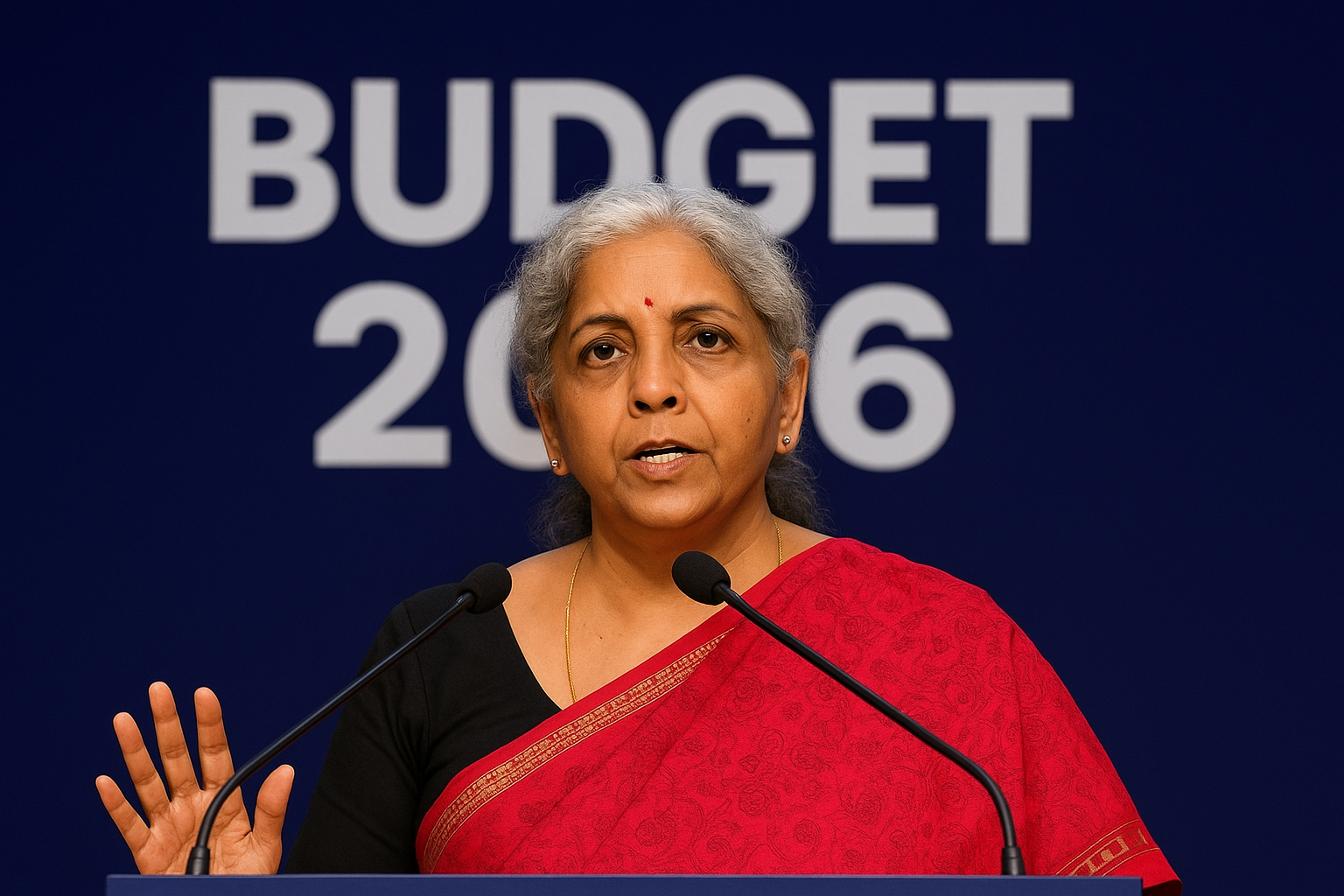
Union Budget 2026: Nirmala Sitharaman’s Ninth Consecutive Presentation
On Sunday, 1 February 2026, Finance Minister Nirmala Sitharaman will present the Union Budget 2026–27 in the Lok Sabha at 11:00 AM, marking a historic ninth straight annual Budget speech in Parliament. This will be only the third full financial year Budget of the Modi-led NDA 3.0 government and takes place amid heightened expectations from taxpayers, industry, and global markets.
Budget Session & Tradition
The Budget Session of Parliament opened on 28 January 2026, with addresses by the President. In the run-up, the Finance Ministry observed the traditional Halwa Ceremony at North Block — a ritual that heralds the final countdown to the Budget and locks in officials working on its preparation.
This year’s Budget falls on a Sunday, a relatively rare occurrence in recent parliamentary history. Notably, both the BSE and NSE stock exchanges will remain open for trading during the speech so that financial markets can react to fiscal policy announcements in real time.
Economic Context & Policy Focus
Budget 2026 arrives against a backdrop of global economic uncertainties, including trade tensions and tariff pressures, alongside India’s strong growth performance. With GDP growth projected to remain robust, the government’s fiscal strategy is expected to balance growth-oriented spending with discipline on deficits and debt.
Finance officials have been closely watching the fiscal deficit, which was targeted at around 4.4 % of GDP in the last fiscal year, and there is keen interest in whether the government will reaffirm conservative targets while allocating resources for growth and social welfare.
Policy Priorities Under Discussion
Though the official Budget document will provide exact figures and schemes, media and expert expectations suggest several key policy thrusts:
1. Taxation and Relief Measures
- Income tax relief for individual taxpayers remains a front-and-center expectation, with calls for higher standard deductions and inflation-linked adjustments to slabs.
- Simplification of direct tax rules and certainty to reduce litigation is also being highlighted by economists and industry analysts.
2. Customs Duty and Trade Reforms
- Industry is pushing for customs duty overhaul and rationalisation to streamline tariffs, improve ease of doing business, and help export competitiveness.
3. Agriculture & Rural Development
- Expected measures include expansion of credit schemes like Kisan Credit Cards, focus on climate-resilient agriculture, and support for pulses and other key crops to strengthen rural economies.
4. Infrastructure and Capex
- Continued emphasis on capital expenditure (Capex), especially under the Gati Shakti logistics framework, to boost connectivity and make Indian exports more competitive.
5. Healthcare & Social Welfare
- Strengthening outlays for programmes like Ayushman Bharat (PM-JAY) and other social sector spending to widen coverage and improve health outcomes for the poor and underprivileged.
6. Jobs, Skills & Technology
- Proposed support for job creation, skill development, start-ups, and adoption of future technologies (e.g., AI and digital infrastructure) is expected to be a recurring theme in government policy documents leading up to the Budget.
The Team Behind the Budget
Sitharaman’s budget preparations are supported by a seasoned team of senior Finance Ministry officials and economists who form the core Budget “war room.” This includes secretaries from key departments like Economic Affairs, Revenue, Expenditure, Financial Services, and DIPAM, along with the Chief Economic Adviser.
The collaborative effort blends fiscal policy expertise with practical planning to ensure the Budget addresses macroeconomic goals while responding to constituency-level needs.
Why This Budget Matters
- Historical Significance: Sitharaman’s ninth consecutive Budget speaks to continuity in economic policy and sustained leadership, with comparison only to historical figures like Morarji Desai and P. Chidambaram in terms of consecutive presentations.
- Economic Momentum: As India navigates global headwinds and internal development priorities, this Budget will be closely watched for measures that can fuel domestic demand, investment, and export growth.
- Public Impact: From middle-class tax considerations to farmer support and healthcare funding, the decisions made in this Budget will directly influence household finances and business strategies in 2026–27.
What Happens Next
- 1 Feb 2026: Budget 2026 speech in Lok Sabha at 11 AM.
- Immediately following: Detailed Budget documents are released, with estimates for receipts, expenditures, fiscal deficit, tax proposals, and allocation across ministries.