
What Is a Fixed Deposit (FD)?
A Fixed Deposit (FD) is a financial product offered by banks, non-banking finance companies (NBFCs), and housing finance companies in India that lets you deposit a lump sum for a fixed tenure at a guaranteed interest rate. It is one of India’s most popular safe investment options because the principal and interest are assured (especially up to ₹5 lakh under DICGC insurance).
- Key benefits:
- Guaranteed returns
- Easy to open & manage
- Offers higher interest than regular savings accounts
- Special higher rates for senior citizens (usually +0.25% to +0.75%)
Current Best FD Rates
The Reserve Bank of India (RBI) eased monetary policy in 2025, leading many banks to adjust FD rates downward. However, several banks — especially small finance banks and NBFCs — still offer attractive interest rates.
Highest FD Rates Available
| Institution | Max Rate (General Public) | Max Rate (Senior Citizens) |
| Manipal Housing Finance (NBFC) | 8.25% | 8.25% |
| Bandhan Bank | 8.05% | 8.55% |
| Suryoday Small Finance Bank | 8.05% | 8.10% |
| Jana Small Finance Bank | 8.00% | 8.00% |
| Utkarsh Small Finance Bank | 7.65% | 8.15% |
| Shriram Finance (NBFC) | 7.60% | Higher with bonus |
| Ujjivan Small Finance Bank | 7.45% | 7.95% |
Note: Some NBFCs (non-bank lenders) also advertise very high FD yields (even above 8.5%), but risk and insurance cover may differ compared with bank FDs. Always check safety ratings and DICGC protection.
Public Sector & Major Private Banks FD Rates
For national and large private banks, rates are generally moderate but stable, backed by strong safety and wide branch networks:
| Bank | General FD Rates | Senior Citizen Rates |
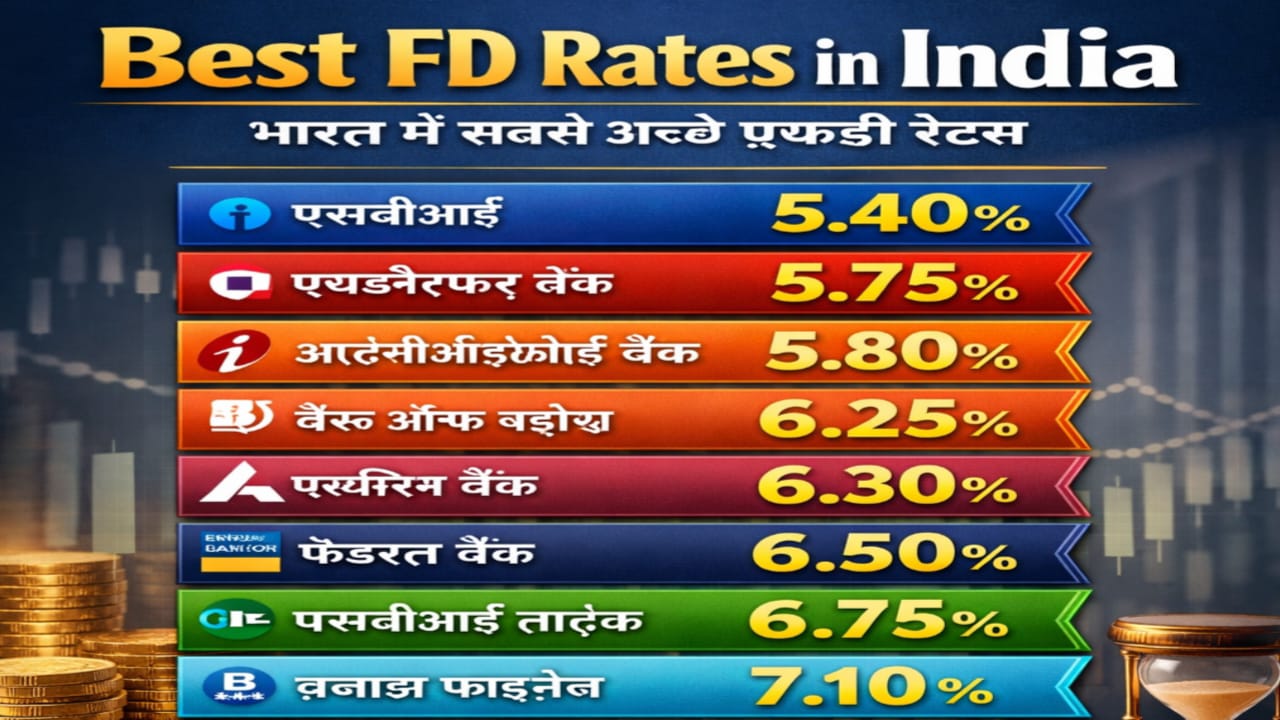
| State Bank of India (SBI) | 3.05% – 6.60% | 3.55% – 7.10% |
| HDFC Bank / ICICI Bank / Axis Bank | 2.75% – 6.60% | 3.25% – 7.35% |
| YES Bank / RBL Bank / IDFC FIRST | 3.00% – 7.00% | 3.75% – 7.75% |
| Public Sector Banks (BoB, PNB, Indian Bank) | 3.00% – 6.75% | 3.50% – 7.30% |
Senior Citizens – Extra Benefit
Most banks add a special interest rate premium for senior citizens (typically between 0.25–0.75% extra). For example:
- Senior rate up to ~8.55% at Bandhan Bank’s short-term FD, higher than the general public rate.
- Many small finance banks offer senior boosts on top of competitive base rates.
How to Choose the Best FD for You
Here’s how to decide based on your goals:
1. Return vs Safety
- NBFCs & smaller banks may have higher rates, but check credit rating & DICGC protection.
- Public sector and large private banks offer stable and widely trusted safety.
2. Tenure Matters
- Short-term FDs (1–2 years): Good for liquidity and emergency planning.
- Medium/Long-term (3–5+ years): Often higher interest (especially at small finance banks).
3. Tax Implications
- Interest earned on FDs above ₹40,000 (general) and ₹50,000 (senior citizens) is taxable.
- TDS (Tax Deducted at Source) may apply.
4. Compound or Cumulative
- Cumulative FDs: Interest compounds and pays at maturity — ideal for wealth building.
- Non-cumulative: Monthly/quarterly interest payouts — useful for regular income.
Conclusion
Even in a falling interest rate environment, FDs remain an important conservative investment for many Indians — especially retirees and risk-averse savers. By comparing current rates across banks & institutions, you can align your strategy with your financial goals.