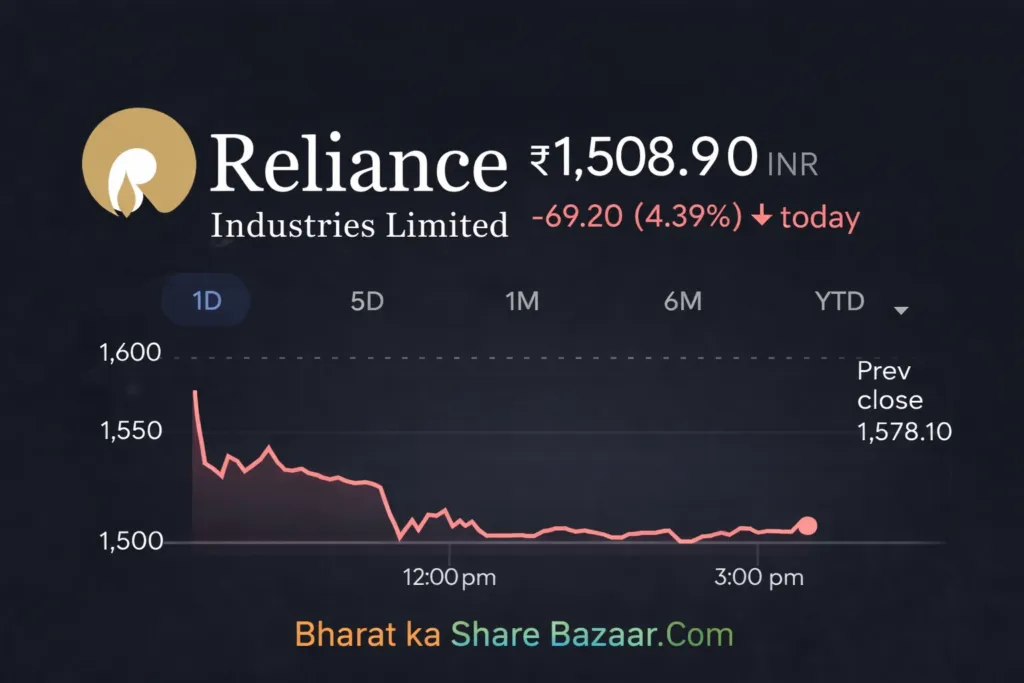

Reliance Industries Ltd (RIL)
Reliance Industries Ltd (RIL) is India’s largest private conglomerate, with diversified businesses spanning oil-to-chemicals (O2C), telecommunications (Jio), retail, media, digital services, and new energy. As of early 2026, RIL remains one of the most widely followed stocks on Indian markets — both for institutional investors and long-term wealth builders.
This article dives deeply into the long-term share price outlook for RIL up to 2030, presenting analyst forecasts, key strategic growth drivers, risks and challenges, and what investors should consider when forming expectations.
1. Current Analyst Sentiment
Despite broader market volatility in 2025–2026, major brokerages have remained generally bullish on RIL with varied price target forecasts:
- Goldman Sachs recently maintained a “Buy” rating and adjusted some targets on RIL, highlighting value accretion from the Disney joint venture and improving free-cash-flow trajectory, which underpins bullish medium-term prospects.
- Other analysts, such as JP Morgan and Kotak Institutional Equities, have reaffirmed overweight/add ratings on the stock, reiterating confidence in medium-term earnings improvement.
- Broader sentiment across brokerage houses remains skewed toward Buy, with several estimates forecasting upside targets every year through 2030.
This suggests that, while cyclical volatility exists, a longer-term growth narrative still dominates much of analyst consensus.
2. Long-Term Price Target to 2030
Analyst and model-based forecasts vary, but several sources point to a material rise in RIL share price by 2030 compared to present levels.
Summary: Most analysts forecasting 2030 targets range from roughly ₹2,800 to ₹3,600* on the conservative to mid-case end.
More Optimistic / Structural Growth Case
Some projections — often based on continued expansion of digital services, retail, and energy diversification — suggest higher price appreciation:
- Certain long-term technical/aggregated forecasts place RIL as high as ₹4,500–₹5,500 by 2030.
- Alternative models even show prices beyond ₹7,000 in extremely bullish scenarios, though these tend to assume near perfect execution, high valuations, and strong capital market sentiment.
Key takeaway: Base-case by 2030 tends to cluster around ₹3,000-₹4,000+, with upside in structurally stronger scenarios.
3. Major Growth Drivers Long-Term Targets
Five key areas underpin bullish expectations for RIL through 2030:
A. Telecom & Digital Services (Reliance Jio)
- Jio has amassed over 500 million subscribers, becoming one of the largest 5G operators globally.
- The planned Jio IPO (expected mid-2026) could unlock substantial shareholder value as the standalone valuation becomes more transparent.
Impact: Expansion of digital revenue and higher ARPU should materially lift profitability.
B. Retail Expansion
Reliance Retail, already India’s largest organized retail chain, continues to grow across categories — from fashion and grocery to FMCG and lifestyle products.
With retail contributing an increasing share of EBITDA, this segment plays a central role in growth forecasts.
C. New Energy & Green Transition
RIL’s push into green energy giga factories — including solar PV modules, battery storage, and green hydrogen — is aimed at achieving net-zero carbon status by 2035.
Analysts believe this venture could become a major earnings engine by 2030 if scaling successfully — providing a growing alternative to its legacy O2C business.
D. Media & Strategic Alliances
The merger with Disney (Viacom18) and partnerships with tech giants (Google, Meta) boost its media and AI ecosystem, fostering diversification beyond traditional segments.
E. Financial Profile & Cash Flows
Many brokerages forecast improving cash flows and return metrics supported by reduced capex intensity in legacy businesses and rising EBITDA contribution from digital and retail.
4. Risks and Potential Headwinds
Despite optimistic forecasts, several risks could influence RIL’s ability to reach higher price targets:
A. Sectoral & Regulatory Risks
Operations span heavily regulated sectors — energy, telecom and retail — making RIL sensitive to policy shifts or pricing interventions. Changes in telecom tariffs or energy regulations could impact margins.
B. Execution Risk on New Ventures
New energy and green initiatives require massive capital and technology execution. Delays or cost overruns could dampen earnings. Market observers have flagged delays in battery manufacturing as a risk in some quarters.
C. Global Macro & Crude Price Cycles
RIL’s legacy oil-to-chemicals business remains exposed to global crude prices. Downturns or oversupply could compress margins.
D. Market Sentiment & Valuation Trends
Stock market valuations for conglomerates can tighten if investors prefer pure-play high growth (digital or tech) stocks, potentially limiting valuation multiples.
5. How Investors 2030 Targets
For long-term investors:
- Focus on fundamentals: A long investment horizon through 2030 increases the probability of capturing structural growth.
- Evaluate strategic milestones: Monitor key catalysts such as Jio IPO, new energy trials, and retail market share expansion.
- Diversify risks: Keep an eye on regulatory developments and global commodity movements.
For traders/short-term speculators:
- Expect volatility around quarterly results, tariff decisions, regulatory changes, and global indices.
- Technical support and resistance levels will influence short-term entry/exit strategies.
6. Reliance Share Price Achieve by 2030?
- Base-Case Target (Median Analyst View): ₹3,000 – ₹4,000 per share by 2030 — driven by telecom, retail, and digital growth.
- Optimistic Scenario: Amid strong execution and valuation re-rating, ₹4,000 – ₹5,500+ territory is possible.
- Downside & Stress Scenarios: Execution delays or macro headwinds could keep the share price below these levels in the short term.
Conclusion
Reliance Industries remains a cornerstone long-term stock in India with strong diversification across sectors. While exact price targets for 2030 vary widely among analysts and forecasting models, the broad consensus suggests notable upside potential from current levels — led by digital transformation, retail expansion, and emerging energy ventures.
Disclaimer: This article is for informational and educational purposes only and does not constitute financial advice. Always consult a qualified financial advisor before making investment decisions.